Introducing the Campers Frontier Campground Report: How We Rate Campgrounds
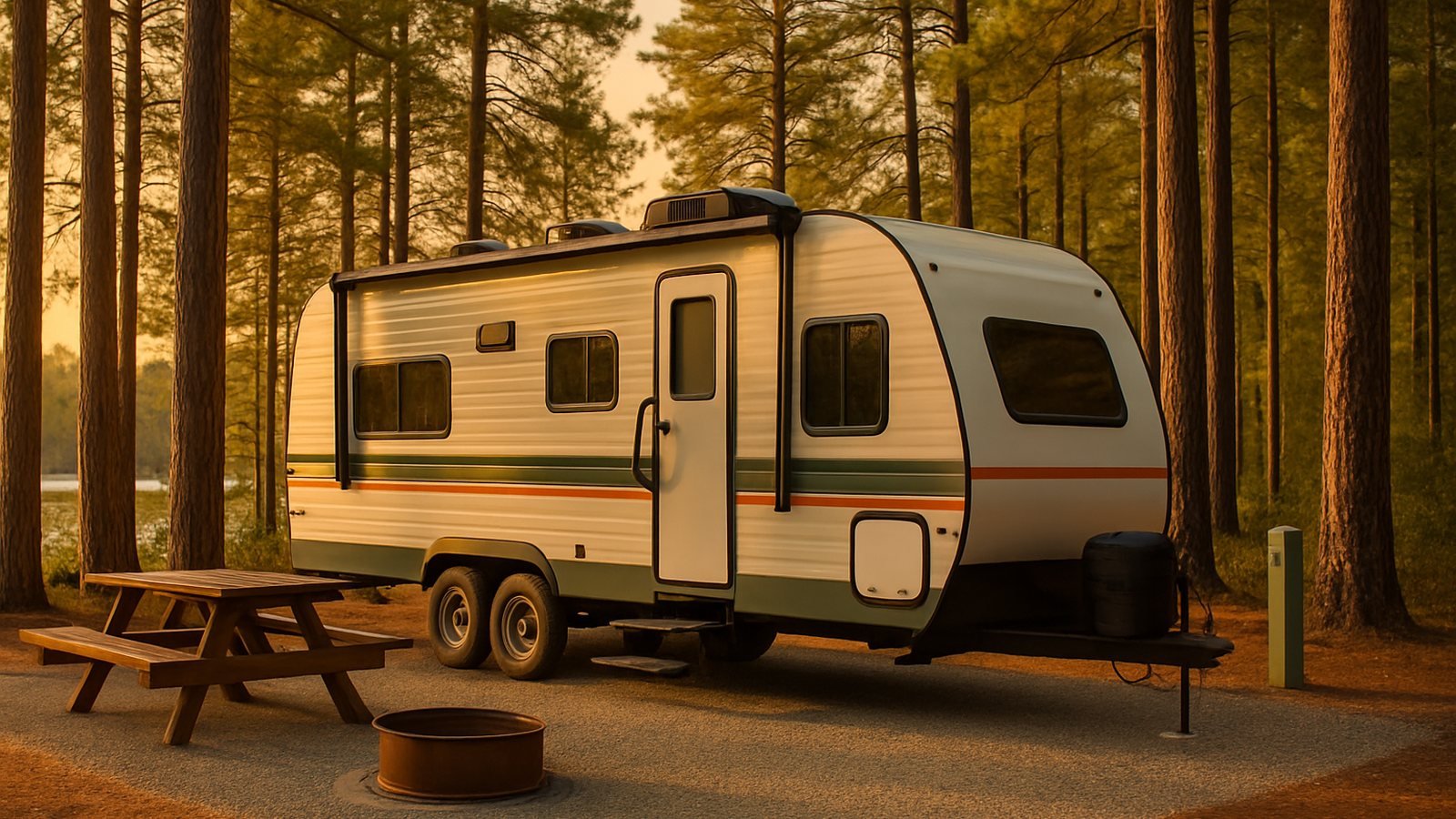
Every RV owner has a story about a campground that looked wonderful online and turned out to be something else entirely. The photos showed a lakeside site under tall pines. The reality was a sloped gravel pad squeezed between two diesel pushers, a power pedestal that tripped every time the air conditioner cycled, and a “lake view” that required standing on the picnic table.
That gap between what a listing promises and what a campground delivers is the reason we created the Campers Frontier Campground Report. This post explains what the Report is, how we score campgrounds, what each rating means, and how you can use our Reports (and our method) to choose better places to stay.
Why Another Campground Rating?
There is no shortage of campground star ratings. Booking sites, review apps and membership directories all offer them. The trouble is that a single star average tells you very little. A five-star review from a tent camper who loved the quiet walk-in sites says nothing about whether a 38-foot fifth wheel can make the turn into the back loop. A one-star review written because the camp store was closed early says nothing about the sites themselves.
RV travelers need more specific answers before they book:
- Can my rig physically get in, turn around and park level?
- Is the electrical service reliable at the amperage I need?
- How close is my neighbor, really?
- Is it worth the nightly rate compared with nearby options?
The Campground Report breaks a campground into seven clear criteria so you can weigh what matters to you. A retired couple in a Class A and a family of five in a bunkhouse travel trailer can read the same Report and reach different, equally good decisions.
The Seven Criteria We Rate
Each criterion is scored from 1 to 5. We explain every score in plain language, because the reasoning is more useful than the number.
1. Accessibility
How easy is it to get to the campground and move around inside it? We look at the approach road (paved, gravel, washboard, steep grades), the entrance and check-in area, internal road width, tree clearance, tight turns and whether there is room to unhook a toad or disconnect a tow vehicle without blocking traffic. We also note accessibility for campers with limited mobility: accessible sites, restrooms and paths.
- 5: Easy approach, wide roads, clear overhead, no surprises for large rigs.
- 3: Manageable with care; some tight spots or a rough final mile.
- 1: Difficult or unsafe for most RVs larger than a small trailer or van.
2. Site Quality
This is the heart of the Report. We look at pad surface and levelness, pad length versus what is advertised, back-in versus pull-through options, utility placement (can your cord and hose reach without extensions?), drainage after rain, and the usable living space beside the rig: picnic table, fire ring, room to put out an awning.
3. Amenities
Hookups come first: electrical amperage and pedestal condition, water pressure, sewer connections or dump station access. Then the extras: restrooms and showers (cleanliness, hours, hot water), laundry, Wi-Fi and cell signal, camp store, propane fill, pet areas and recreation. We rate amenities against what the campground claims to offer. A rustic state park is not penalized for lacking a pool, but it is if the advertised dump station is closed half the season.
4. Value
Value compares the nightly rate (including fees, resort charges and any required memberships) with what you actually get, and with nearby alternatives. A $70 site can be excellent value; a $35 site can be poor value. We note cancellation policies and hidden costs, such as metered electric or extra-vehicle fees.
5. Privacy
How much separation is there between sites? We look at spacing, vegetation screening, site orientation (do your doors face your neighbor’s sewer hookup?), noise from roads, rail lines or generators, and how busy the campground feels on a typical weekend.
6. Scenery
Some campgrounds are destinations; others are a clean place to sleep between destinations. Both have value. Scenery rates the setting itself: views, shade, water access, trails, night skies and how the campground fits into its landscape. We try to rate the typical site, not the one premium waterfront row.
7. RV Suitability
This pulls the RV-specific details together into one practical judgment: what size and type of RV is this campground a good fit for? A campground can be lovely and still a poor match for a 40-foot motorhome. We give a recommended maximum length and note any rig types that will struggle.
How the Overall Score Works
Each Report shows all seven scores and an overall score. The overall score is a simple average, rounded to one decimal place, with one rule: if Accessibility or RV Suitability scores a 1, we say so clearly at the top of the Report, regardless of the average. A beautiful campground you cannot safely reach is not a good recommendation for most of our readers.
We also include a short “Best for” line, such as “Best for: small trailers and vans seeking quiet, wooded sites” or “Best for: big rigs needing a reliable overnight stop near the interstate.” Read it first. It is often the most useful sentence in the Report.
What Each Report Includes
Every Campground Report follows the same layout, so you can compare them easily:
- At a glance: location, season, number of sites, hookup types, price range, reservation method and the “Best for” line.
- Scorecard: the seven criteria with a sentence of reasoning for each.
- Getting there: approach notes, steep grades, low clearances and the last fuel stop.
- The sites: which loops or site numbers stood out, and which to avoid.
- Hookups and services: what worked, what did not.
- Nearby: groceries, propane, dump stations, RV service and things worth seeing.
- What we would do differently: lessons learned during the stay.
- Visit details: when we stayed, how long and what we drove or towed.
How We Gather Information
Trust depends on method, so here is ours.
- We say exactly what we observed. Each Report states when we visited and whether we stayed overnight or toured the campground. If a detail comes from the campground’s own information rather than our observation, we say so.
- We do not accept payment for ratings. Campgrounds cannot buy a Report or a better score. If a campground ever provides a discounted or free stay, we disclose it at the top of the Report.
- We update. Campgrounds change ownership, renovate or decline. Each Report shows its last-updated date, and we revise scores when we learn something has changed.
- We welcome corrections. If you stayed somewhere we reported on and found something different, tell us. Reader feedback helps keep Reports accurate.
Campground conditions change with seasons, weather and management. Use any Report, including ours, as one input in your planning, and confirm current details such as rates, closures and site lengths directly with the campground before you go.
How to Use a Report When Planning a Trip
A Report is most useful when you read it with your own priorities in mind. Here is a simple approach.
Start with your non-negotiables
Write down the two or three things that must be true for a stay to work. For many RVers that is rig length, amperage (30 or 50 amp) and sewer hookups. For others it is pet rules or a reliable cell signal for remote work. Check those details in the Scorecard and Hookups sections first. If a campground fails your non-negotiables, move on no matter how high its overall score is.
Weight the criteria you care about
If you travel to see places, Scenery and Privacy may matter more to you than Amenities. If you are making a one-night stop on a long drive, Accessibility and Value matter most. You can mentally re-weight any Report this way; that is why we show every score separately.
Read the site-specific notes
Within one campground, site quality can vary enormously. Our notes on particular loops and site numbers can be the difference between a cramped, sloping spot and a great one at the same price.
Compare two or three options
Because every Report uses the same format, it is easy to set two side by side. Look especially at Value: the cheaper campground is not always the better deal once you account for fees, distance and site quality.
Use the Method Yourself
You do not need to wait for us to visit a campground to benefit from the Report method. Before booking anywhere, run through the seven criteria with whatever information you can find: the campground map, satellite imagery, recent reviews and a phone call to the office. A few useful questions to ask:
- “What is the actual usable length of the site, and is it level side to side?”
- “Is the electrical service 30 or 50 amp at that site, and has the pedestal been updated?”
- “Are there any low branches or tight turns on the way to that loop?”
- “What fees are added to the nightly rate?”
After your stay, jot down your own seven scores. Over time you will build a personal record of places worth returning to, and you will get better at spotting good campgrounds before you arrive.
What Comes Next
Our first Campground Reports will cover a mix of public and private campgrounds: state parks, Corps of Engineers lakes, national forest campgrounds suitable for RVs, and private parks along common travel routes. We will prioritize places that are useful year-round and those that suit a range of rig sizes.
If you have a campground you would like us to report on, or one you think is underrated, we would love to hear about it.
Many of the same principles apply to tent sites, too. Our sister site, Camping Frontier, covers tent camping and outdoor skills, and our Frontier family site The Homestead Frontier covers the skills of seasonal preparation at home.
Frequently Asked Questions
Do you rate every campground you visit?
No. We only publish a Report when we have enough first-hand information to score all seven criteria fairly. A quick drive-through may become a short note instead.
Can a campground ask to be reviewed or pay for a better score?
A campground can invite us, but it cannot pay for a Report or influence scores. Any free or discounted stay is disclosed at the top of the Report.
Why a 1–5 scale instead of percentages?
Five levels are easy to understand and hard to over-interpret. The written reasoning for each score carries the real detail.
Are tent campers welcome to use the Reports?
Absolutely. Privacy, Scenery, Amenities and Value apply to everyone. Just weight RV Suitability and Accessibility less heavily if you are not bringing a rig.
How often are Reports updated?
Whenever we learn of a meaningful change, and at least whenever we revisit. Each Report shows its last-updated date.
A Note on Safety
Always confirm your RV’s height, length and weight against campground roads and bridges, and never rely on a single source for clearances. Check the condition of any power pedestal before plugging in. A surge protector or electrical management system is a sensible precaution at any campground, and if a pedestal shows scorching, loose parts or reversed polarity, ask for a different site. Use the campground’s posted speed limits; campgrounds are full of children, pets and cyclists.
Explore more, camp better, and choose your campgrounds with your eyes open. We are glad to have you along.
Liked this? Get one like it every week.
Practical RV guides, gear picks and park reviews, in your inbox once a week, plus the free RV Trip-Ready Checklist when you join. See what's inside.
Free. One email a week. Unsubscribe anytime.