
RV Camping for Beginners: Your Complete First-Trip Guide
This page is a beginner's guide for first-time RV campers, providing step-by-step tips for a smooth and enjoyable trip. It covers choosing a campground, packing essentials, setting up, and what to expect during your stay. Use it to help plan and have a successful first RV camping experience.
Your first RV trip can be one of the best weekends you’ve ever had, or the weekend you spend sitting in the dark wondering why nothing works. The difference is rarely luck. It comes down to a handful of simple habits that experienced RVers follow without thinking about them.
This guide walks you through every one of those habits, from choosing the right first campground to the final walk-around before you pull away. It’s written for brand-new travel trailer, fifth wheel and motorhome owners, and for anyone renting an RV for the first time.
Prefer to read? The full guide is below, and each section links to the matching part of the video.
Key takeaways
- Keep your first trip short: two or three hours from home, two nights, full hookups and a pull-through site.
- “Camp” in your driveway first, and start the fridge the night before you leave.
- Pack hookup gear before kitchen gear. A surge protector and a water pressure regulator come first.
- Arrive with daylight to spare, then hook up in order: power, then water, then sewer.
- Keep the black tank valve closed until the tank is at least two-thirds full.
- Before you drive away, do one slow walk-around. It prevents most first-trip damage.
Pick a Beginner-Friendly First Trip
▶ Watch this part in the video (0:31)
Start with distance. Choose a campground no more than two or three hours from home. A short drive leaves you energy for setup, and if something goes wrong, home isn’t far away.
- Book full hookups if you can. Electric, water and sewer right at your site let you learn your systems without worrying about running out of fresh water or filling your tanks.
- Ask for a pull-through site. You drive in one side and out the other, so there’s no backing up. Backing a trailer is a skill worth learning, just not with an audience on day one.
- Plan for two nights. One night is all setup and teardown. Two nights give you a full day to actually enjoy the place.
Get to Know Your RV at Home
▶ Watch this part in the video (1:08)
Before you leave the driveway, spend an afternoon “camping” at home. Open every compartment, find every switch and read the labels. If you can, plug in and run the lights, the refrigerator and the water pump. Fill the fresh water tank and run every faucet. It’s much easier to find a leak in your driveway than at nine o’clock at night in a strange campground.
Keep the owner’s manual handy and flag the pages for the water heater, the furnace and the slide-outs. Those three systems confuse new owners more than anything else.
A tip most people learn the hard way: many RV refrigerators need eight hours or more to cool down. Turn yours on the night before you leave and load it with food that’s already cold.
Pack the Essentials, Not Everything
▶ Watch this part in the video (1:47)
New RVers tend to overpack the kitchen and underpack the hookup gear. Flip that around.
- Water: a white drinking water hose, a water pressure regulator and a good inline filter. Campground water pressure can run high enough to damage RV plumbing, and a regulator protects it for about the price of lunch.
- Sewer: a quality sewer hose, the fittings to connect it and a box of disposable gloves. Keep all of it in its own bin, away from everything else.
- Power: a surge protector is the most important accessory you can buy. Campground power isn’t always clean, and a bad pedestal can damage thousands of dollars of electronics in seconds.
- Setup: leveling blocks and wheel chocks, plus a flashlight, a tire pressure gauge, a small tool kit and a fire extinguisher you’ve checked.
- Kitchen: keep it simple. Plan easy meals, bring one good pan and leave the gadgets at home for now.
The exact items we show in the video are listed in Gear mentioned in this video below.
Arrival and Setup, Step by Step
▶ Watch this part in the video (2:39)
Try to arrive with at least two hours of daylight left. Setting up in the dark is the most common first-trip stress, and it’s completely avoidable. If you’re traveling with a partner, agree on hand signals before you pull in: stop means stop, and nobody yells. A good spotter stands where the driver can see them in the mirror.
Walk the site before you park. Look up for low branches, look down for rocks and stumps, and find the power, water and sewer connections. Then position the RV so every hookup reaches.
- Chock the wheels first.
- Level side to side with blocks. If you tow a trailer, level front to back with the tongue jack after you unhitch.
- Power: turn the pedestal breaker off, plug in your surge protector, turn the breaker back on and check the reading before you connect the RV.
- Water: attach the regulator and filter at the spigot, then run the hose to the RV.
- Sewer last: connect the hose, but keep the black tank valve closed. Let the tank fill at least two-thirds before you dump so the solids flush out properly.
- Extend the slides and open the awning. Then stop, grab a chair and enjoy it. You made it.
Safety note: if the surge protector reports a fault, don’t connect. Try another pedestal or call the campground office. Leave electrical repairs to a qualified technician.
Your First Night and Day at Camp
▶ Watch this part in the video (3:44)
Your first night is when you learn how your RV really lives. Expect a few new sounds: the water pump hums, the furnace clicks and the refrigerator makes small noises. All of that is normal.
- Check the tank monitor before bed. Fresh, gray and black levels tell you how you’re doing. Sensors are often a little off, so treat them as a rough guide.
- Manage moisture. If the night turns cool, run the furnace on low and crack a roof vent or window. Cooking and breathing add a lot of moisture, and a little airflow keeps condensation off the walls and windows.
- Make propane a routine. Open the tank valve slowly in the morning, and close it again when you pack up to travel.
- Go enjoy the place. Walk the loop, find the trails and see how other people have set up their sites. One morning walk teaches more than a week of forums.
- Keep a small notebook. Write down what you wished you’d brought, what confused you and what worked. That list becomes your packing plan for trip number two.
When Something Goes Wrong
▶ Watch this part in the video (4:55)
Something small will go wrong. It’s part of RVing. If the power cuts out, check the pedestal breaker first, then the breaker panel inside, then your surge protector’s display. Most power problems turn out to be one of those three.
If you’re stuck, ask the camp host. They’ve seen every problem you can imagine and are usually glad to help. Staying calm and asking for help is exactly what experienced RVers do too.
Campground Etiquette
▶ Watch this part in the video (5:18)
- Respect quiet hours, which usually start around 10 p.m.
- Walk around other people’s sites, not through them.
- Keep your dog leashed and your outdoor lights low.
- Leave your site cleaner than you found it.
And don’t be shy. RVers are some of the friendliest people you’ll meet, and most of them love helping a beginner.
Pack Up and Pull Away
▶ Watch this part in the video (5:37)
On your last morning, dump the black tank first, then the gray. The soapy gray water helps rinse the hose. Disconnect everything in reverse order, retract the slides and awning, and stow loose items inside.
Then do a slow walk-around before you drive. Check that the antenna is down, the steps are up, the vents are closed and the chocks are in the truck, not under the tire. That walk-around saves more RVs than any gadget.
Gear mentioned in this video
As an Amazon Associate I earn from qualifying purchases.
- Progressive Industries EMS-HW30C 30A RV Surge Protector: Guards your rig against bad pedestal power: surges, low or high voltage, open ground and miswiring.
- Camco RV Water Hose Pressure Regulator: Screws on at the spigot and keeps high campground water pressure away from your plumbing.
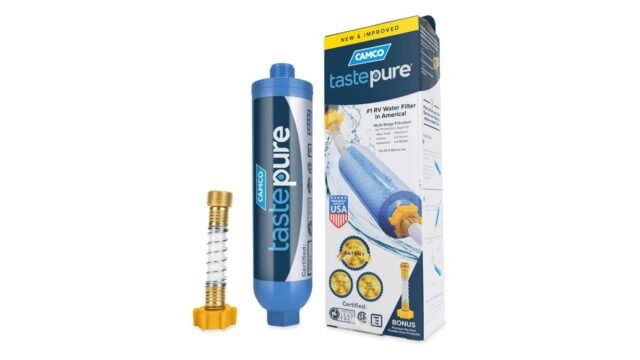
- Camco TastePURE RV Water Filter: An inline taste-and-sediment filter that goes between the spigot and your drinking water hose.
- Lynx Levelers 11-Pack with Lynx Cap: Interlocking blocks you can stack as a ramp or pyramid to level side to side.
- Camco RhinoFLEX RV Wye Sewer Hose Fitting: A clear, swiveling wye fitting for rigs with two tank outlets; you can see when the tanks are done draining.
Keep Going
- Next in the series: 15 Costly Mistakes First-Time RV Owners Make (video)
- New to the site? Start Here for our beginner guides.
- Tent camping instead? Our sister site Camping Frontier has beginner guides for tent campers.
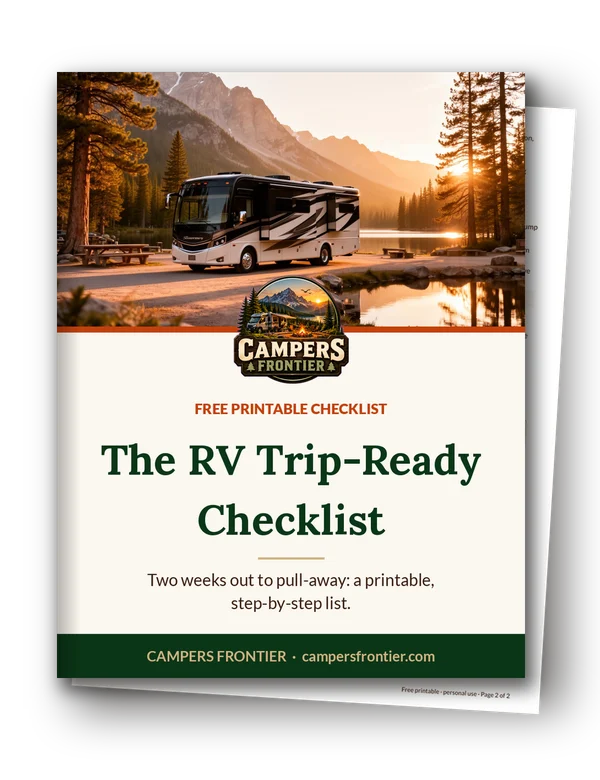
Get The RV Trip-Ready Checklist
Everything in this guide, on two printable pages.
A free 2-page printable that takes you from two weeks out to pulling away from your site.
- Two-weeks-out planning, from reservations to service
- A day-before systems check: tires, hitch, propane, water, electrical
- A hitch-up and departure walkaround so nothing gets missed
Free. About one email a week with practical RV guides. Unsubscribe anytime.
Watch every guide on YouTube: youtube.com/@campersfrontier. Your first trip doesn’t have to be perfect. It just has to be the first.

1 comment