15 Costly Mistakes First-Time RV Owners Make
This guide helps new RV owners avoid expensive mistakes, such as planning a huge trip or skipping an inspection. It covers buying, planning, hookups, and maintenance tips, offering simple steps to save money and hassle. Read the guide or watch the video for advice on handling your RV with care.
One gust of wind is all it takes to turn a brand-new awning into a repair bill of several hundred dollars. First-time RV owners tend to make the same mistakes, and many of them are expensive. The good news: every one is easy to avoid once you know what to look for.
This guide covers 15 costly mistakes in four groups: buying and planning, hookups and systems, setup and driving, and maintenance. If you’re still shopping, the first group will save you the most money. If you already own an RV, the hookup and maintenance mistakes are the ones that catch even experienced owners.
Prefer to read? The full guide is below, and each section links to the matching part of the video.
Key takeaways
- Buy for how you’ll really travel, and get an independent inspection before you sign.
- Know every weight rating: tow vehicle capacity, payload, hitch and the RV’s maximum.
- Always plug in through a surge protector and use a water pressure regulator.
- Chock and level before you extend the slides, and roll in the awning whenever you leave.
- Check the roof twice a year and judge tires by their date code, not their tread.
- Set aside a repair budget and use a written checklist for setup, travel days and pack-up.
Buying and Planning Mistakes
▶ Watch this part in the video (0:53)
- Buying more RV than you need. Bigger looks great on the lot, but it limits where you can camp, costs more to fuel and store, and is harder to drive. Buy for how you’ll actually travel, not the dream trip you might take once.
- Skipping an independent inspection. New or used, have a certified RV inspector look it over before you sign. A few hundred dollars up front can reveal water damage or frame problems that would cost thousands later.
- Ignoring weight ratings. Your tow vehicle has a towing capacity, a payload limit and a hitch rating, and your RV has its own maximum weight. Going over any of them is unsafe and can void a warranty. Always go by the manufacturer’s ratings.
- Planning a huge first trip. A two-week cross-country adventure as your first outing is a recipe for stress. Start close to home with a two-night weekend and build from there.
New to all of this? Start with our RV Camping for Beginners guide.
Hookup and Systems Mistakes
▶ Watch this part in the video (1:50)
- Plugging in without a surge protector. Campground pedestals can be miswired or deliver low voltage, which can damage your converter, air conditioner or refrigerator board. A good electrical protector pays for itself the first time it saves you.
- Skipping the water pressure regulator. Some campgrounds push enough pressure to burst fittings inside your walls. A regulator costs less than a tank of gas and protects your whole plumbing system.
- Leaving the black tank valve open at a full-hookup site. Liquids drain away, solids stay behind, and the buildup is miserable to clear. Keep it closed, let it fill at least two-thirds, then dump.
- Using too little water and the wrong toilet paper. Use plenty of water every flush and stick with paper that breaks down quickly. Your tank sensors will thank you.
- Neglecting the batteries. Keep the terminals clean, keep flooded batteries topped up with distilled water, and use the battery disconnect when the RV is in storage.
Setup and Driving Mistakes
▶ Watch this part in the video (3:01)
- Extending slides before you level. Running slides on an unlevel rig can twist the mechanism and the frame. Chock, level, then extend.
- Leaving the awning out unattended. Wind and rain can destroy an awning in minutes. Roll it in when you leave the site or go to bed. If you want shade while you’re gone, tilt one end down so rain runs off.
- Not knowing your height. Measure from the ground to the top of the air conditioner, write it down and stick it on the dashboard. Low bridges, gas station canopies and tree branches don’t forgive.
- Skipping the walk-around. Steps left down, antennas left up and chocks left behind cause some of the most common, most preventable damage. Do a slow lap every time before you pull out.
Maintenance Mistakes
▶ Watch this part in the video (3:53)
- Ignoring the roof. Water is the biggest enemy of any RV, and most leaks start with cracked sealant around vents, seams and edges. Inspect the roof at least twice a year and reseal cracks right away.
- Trusting tires by their tread. RV tires often age out long before they wear out. Check the date code on the sidewall, look for cracking and check the pressure cold before every travel day. Many RV tire makers recommend replacement at around five to seven years, however they look; follow your tire manufacturer’s guidance.
How to Budget for the Unexpected
▶ Watch this part in the video (4:28)
One more money mistake sits underneath all of these: having no repair budget at all. Every RV needs repairs, even new ones. Roads shake things loose, and seals and appliances wear out on their own schedule.
- Set money aside monthly. Many owners plan on roughly 1 to 3 percent of the RV’s value each year for maintenance and repairs. Then a breakdown is an inconvenience, not a crisis.
- Find a technician before you need one. Busy shops can book out for weeks in camping season. A relationship with a mobile tech or service center near home gets you back on the road faster.
- Learn the small fixes. Tightening loose screws, replacing a fuse, cleaning the water pump strainer and resealing a small roof crack are jobs most owners can handle with basic tools.
- Carry a small tool kit: screwdrivers, a socket set, pliers, a tire pressure gauge, spare fuses, sealant tape and a flashlight.
The Habit That Prevents Most of These
▶ Watch this part in the video (5:48)
Notice the pattern? Almost every mistake here happens when we’re rushed or relying on memory. Pilots use checklists for a reason, and RVers should too. A written routine for setup, travel day and pack-up turns all of this into second nature, and it lets everyone in your group help without guessing. That’s exactly what our free checklist below is for.
Three Bonus Mistakes Worth Mentioning
▶ Watch this part in the video (6:16)
- Overloading the cargo. Every bin and full tank adds weight. Fresh water weighs a little over 8 pounds per gallon, so a full 40-gallon tank adds more than 300 pounds. Travel with only the water you need until you reach camp.
- Forgetting to secure the inside. Before every drive, latch the cabinets, close the shower door, wedge the fridge contents in place, and set anything loose on the floor or bed.
- Skipping RV-specific insurance and roadside assistance. A standard auto roadside plan may not tow a 30-foot trailer or motorhome. Read your policy, ask questions and make sure the rig you own is covered.
And check your propane before every trip. Running out halfway through a chilly night means no furnace and no hot water. Many owners carry two tanks, switch to the full one when the first runs dry, and refill the empty one at the next stop.
Learning From Every Trip
▶ Watch this part in the video (7:29)
Keep a simple trip log. After every trip, write down what went well, what broke and what you forgot. Over a season, that log becomes your own maintenance and packing plan. And lean on the community: most seasoned RVers have made every mistake on this list at least once, and they’re usually glad to help you skip it. The goal isn’t to never make a mistake. It’s to make each one only once, and keep it cheap when you do.
Gear mentioned in this video
As an Amazon Associate I earn from qualifying purchases.
- Progressive Industries EMS-HW30C 30A RV Surge Protector: Guards against miswired pedestals, low or high voltage and surges (mistake #5).
- Camco RV Water Hose Pressure Regulator: Keeps high campground water pressure away from your plumbing (mistake #6).
- Camco RhinoFLEX RV Wye Sewer Hose Fitting: A clear, swiveling sewer fitting; you can see when the tanks are done draining.
- Lynx Levelers 11-Pack with Lynx Cap: Interlocking blocks to level the rig before the slides go out (mistake #10).
- Camco Large RV Wheel Stop: Locks between tandem tires to limit rolling while parked or hitching.
Keep Going
- Start at the beginning: RV Camping for Beginners: Your Complete First-Trip Guide
- New to the site? Start Here for our beginner guides.
- Tent camping instead? Our sister site Camping Frontier covers the first camping trip step by step.
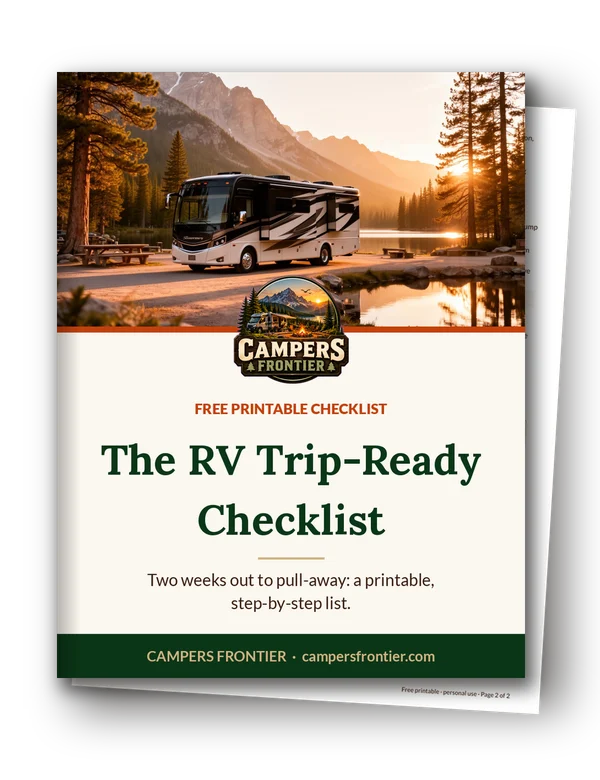
Get The RV Trip-Ready Checklist
A checklist is the habit that prevents most of these mistakes.
A free 2-page printable that takes you from two weeks out to pulling away from your site.
- Two-weeks-out planning, from reservations to service
- A day-before systems check: tires, hitch, propane, water, electrical
- A hitch-up and departure walkaround so nothing gets missed
Free. About one email a week with practical RV guides. Unsubscribe anytime.
Watch every guide on YouTube: youtube.com/@campersfrontier. Which of these mistakes have you made, or nearly made? Every one you skip is money that stays in your pocket.