Lewis and Clark State Park Campground Review: Scenic RV Camping on Lake Sakakawea in North Dakota

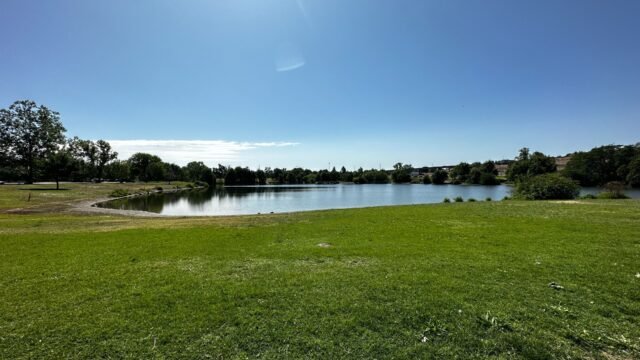
Featured image: Lake Sakakawea at Fort Stevenson State Park, farther east on the same lake (not Lewis and Clark State Park). Photo: David Becker / Wikimedia Commons, CC BY 2.0
Imagine pulling your RV into a campground where rolling prairie hills meet the sparkling waters of one of America’s largest reservoirs.
The afternoon sun stretches across the landscape, casting golden light over grassy hillsides and rugged buttes. A gentle breeze moves through the campground, and somewhere along the shoreline, a fishing boat makes its way across the lake.
You back your RV into a comfortable campsite, connect the utilities, and settle into your camping chair.
There’s no need to rush.
Tomorrow might involve fishing for walleye, paddling along the shoreline, exploring a prairie nature trail, or spending a relaxing afternoon at the swimming beach.
But tonight?
You’ve got a beautiful North Dakota sunset to enjoy.
Welcome to Lewis and Clark State Park Campground, a scenic RV camping destination near Epping, North Dakota.
Situated along an upper bay of Lake Sakakawea, the park combines practical RV accommodations with boating, fishing, swimming, hiking, and fascinating natural scenery.
It’s also a destination with an interesting historical connection.
The park takes its name from explorers Meriwether Lewis and William Clark, whose Corps of Discovery expedition traveled through this region in 1805.
Today, visitors can enjoy the same broad landscapes and impressive river-country scenery that made this part of the northern Great Plains so distinctive.
For RV travelers, the campground’s combination of full-hookup sites, water-and-electric sites, modern restrooms, showers, a marina, and lakeside recreation makes it particularly appealing.
And unlike some lakeside camping destinations, Lewis and Clark offers these amenities at comparatively affordable state park rates.
However, there are a few things to understand before reserving.
This is a prairie campground, where wind, sunshine, changing lake levels, and differences between campground loops can significantly affect your experience.
Choose your campsite carefully, and Lewis and Clark State Park can provide a wonderful introduction to North Dakota’s wide-open landscapes.
Lewis and Clark State Park at a glance
| Feature | Details |
|---|---|
| Location | Epping, North Dakota, near Williston |
| Address | 4904 119th Road NW, Epping, ND 58843 |
| Campground type | North Dakota state park campground |
| Setting | Rolling prairie, rugged buttes, Lake Sakakawea shoreline |
| Premium campsites | 41, with electricity, water, and sewer |
| Modern campsites | 47, with electricity and water |
| Group premium sites | 2, for multiple camping units |
| Group modern sites | 3, for multiple camping units |
| Primitive campsites | 8 |
| Electrical service | Available; verify 30/50-amp requirements by site |
| Pull-through sites | Reported in campground directories; verify specific sites |
| Big-rig suitability | Some sites accommodate larger RVs; check dimensions |
| Restrooms and showers | Yes |
| Dump station | Yes |
| Marina and boat ramp | Yes, subject to lake levels |
| Swimming beach | Yes |
| Fishing | Walleye, sauger, northern pike and other species |
| Playground | Yes |
| Dog park | Yes |
| Hiking and biking | Several prairie and lakeside trails |
| Cabins | 2 seasonal camping cabins |
| Reservations | Up to 95 days in advance |
| Published campsite rates | $15–$35 nightly, depending on category |
| Best suited for | RV families, anglers, boaters, hikers, scenic road trips |
Information verified against North Dakota Parks and Recreation and the state’s tourism guide.
What makes Lewis and Clark State Park special?
The biggest attraction is its location along Lake Sakakawea.
This enormous reservoir stretches across western and central North Dakota, providing opportunities for boating, fishing, wildlife watching, and outdoor recreation.
Lewis and Clark State Park occupies an upper bay of the lake, where the landscape becomes particularly interesting.
Rolling grasslands rise toward rugged buttes, and the shoreline winds around small bays and inlets.
It’s a setting that feels distinctly different from forested campgrounds in the Midwest or mountainous destinations farther west.
Here, the horizon seems enormous.
The sky becomes part of the scenery.
And when the sun begins setting, the surrounding hills and lake can glow with remarkable colors.
The park also protects native mixed-grass prairie and interesting geological formations.
Visitors can explore these natural features on self-guided hiking trails, learning about the plants, animals, and landscapes that define the region.
But there’s another reason this park stands out.
Lewis and Clark offers genuine RV convenience without losing its state park character.
Many scenic public campgrounds provide electricity but require RV travelers to rely on onboard water and wastewater tanks.
Lewis and Clark offers 41 premium campsites with water, sewer, and electrical hookups.
That’s a substantial advantage for families and travelers planning longer stays.
The park also provides modern sites with water and electricity, plus primitive and group camping options.
And with a swimming beach, marina, playground, visitor center, and recreational equipment rentals, there’s plenty to enjoy without leaving the property.
For RV travelers who appreciate a combination of scenery, comfort, and outdoor recreation, that’s an attractive package.
RV sites and the camping experience
One of the most important things to understand about Lewis and Clark State Park is that not all campsites offer the same experience.
The campground is divided into several loops, including Ironstone, Limestone, Sandstone, and Siltstone.
Some areas are relatively open.
Others offer more space between campsites and better opportunities for shade.
For RV travelers, choosing the right loop can make a significant difference.
Premium full-hookup campsites
The park offers 41 premium campsites with electricity, water, and sewer connections.
These are particularly appealing for RV travelers who prefer the convenience of full hookups.
You can use your RV’s bathroom, kitchen, and other facilities without needing to monitor wastewater tank levels as closely.
For a longer vacation, that convenience can be especially valuable.
Full-hookup sites also make the campground attractive to larger motorhomes and fifth wheels, provided the specific campsite can accommodate the vehicle’s dimensions.
The published nightly price is $30–$35.
For a scenic state park campground with full utilities, that’s a competitive rate.
However, confirm the electrical amperage before booking.
Although third-party campground directories report both 30- and 50-amp service, the official park listing does not provide a universal amperage specification for every campsite.
Modern water-and-electric campsites
Lewis and Clark also offers 47 modern campsites with electricity and water.
These are well suited to RV travelers who don’t require sewer connections at their individual sites.
For a weekend stay, water-and-electric service may provide everything you need.
The campground has a dump station, so you can empty your holding tanks when necessary.
Modern sites cost $25–$30 nightly according to the park’s published rate schedule.
That’s an attractive option for campers seeking an economical lakeside getaway.
Group RV campsites
The park also provides two group premium campsites and three group modern campsites.
These accommodate multiple camping units at one group site.
For extended families, camping clubs, or friends traveling in separate RVs, that can be a valuable feature.
The group premium sites include electricity, water, and sewer.
The group modern sites include electricity and water.
Rates are charged per camping unit.
Confirm occupancy limits and the number of permitted RVs before reserving.
Choosing the right campground loop
Recent camper feedback highlights differences between the park’s camping areas.
The Ironstone Loop, for example, has been praised by some visitors for more generous spacing and a peaceful atmosphere.
One September 2025 review described its campsites as having ample grassy areas, with some offering shade and partial lake views.
Other loops, particularly portions of Limestone and Sandstone, may have sites closer together.
That doesn’t necessarily make them undesirable.
Families who enjoy an active campground atmosphere may appreciate those areas.
However, couples seeking quiet evenings and additional privacy may prefer a more spacious site.
Because these observations come from individual visitor experiences, they shouldn’t be treated as guarantees for every campsite.
Our RV camping tip: Study the official campground map before reserving. Compare site dimensions, hookup types, and location. If privacy matters, ask the park about the outer sites in Ironstone Loop and other less densely arranged camping areas.
Big rigs and pull-through sites
Third-party camping directories report that the park accommodates larger RVs and includes pull-through sites.
However, don’t assume every site is suitable for a 40-foot motorhome or a long fifth-wheel combination.
Check the individual site’s dimensions and access route.
Also consider whether you need room for a tow vehicle.
Some campsites may provide sufficient RV pad length but limited additional parking.
For larger rigs, advance planning is particularly important.
Campground amenities and facilities
Lewis and Clark State Park offers a useful collection of amenities that make RV camping more comfortable.
Restrooms and showers
The park provides flush toilets and showers.
These facilities are convenient for families, visitors staying in smaller campers, and travelers who prefer not to use their RV’s onboard bathroom for every shower.
The campground also has vault toilets in designated areas.
Facilities may operate seasonally, so visitors planning an off-season stay should verify which buildings are open. North Dakota Parks and Recreation’s Limited Service Season page lists the comfort station closing and water being turned off at Lewis and Clark State Park on October 4. The campground itself remains open year-round with limited services.
Dump station
An RV dump station is available.
This is particularly important for travelers staying at modern water-and-electric sites.
Even campers with full hookups may appreciate having access to the dump station before departing.
Trader’s Bay Visitor Center
The park’s Trader’s Bay Visitor Center provides information and useful supplies.
According to the official park website, the center sells ice, firewood, fishing tackle, clothing, souvenirs, and snacks.
It also has restrooms.
During the summer season, published hours are generally 9 a.m. to 8 p.m.
Winter hours are shorter.
This is a convenient place to stop for trail information, local recommendations, and basic supplies.
Playground and dog park
Families will appreciate the campground’s playground.
It’s a useful place for children to burn off energy between fishing trips and other activities.
The park also has a designated dog park.
Pets are welcome in the state park but must remain leashed outside permitted off-leash areas.
For RV travelers bringing dogs, that’s a welcome convenience.
Picnic shelters and amphitheater
The park includes three reservable picnic shelters.
These accommodate different group sizes and can be useful for family reunions or organized gatherings.
There’s also an amphitheater.
Check the park’s event schedule for any seasonal educational programs or activities.
Things to do at Lewis and Clark State Park
The campground’s greatest advantage is the variety of outdoor recreation available nearby.
Explore Lake Sakakawea
Lake Sakakawea is one of North Dakota’s signature outdoor destinations.
The reservoir is known for its expansive waters, rugged shorelines, and excellent fishing.
For visitors staying at Lewis and Clark State Park, access to the lake is one of the biggest reasons to choose this campground.
You can spend your morning fishing, enjoy an afternoon on the water, or simply relax near the shoreline.
The scenery is particularly attractive in the early morning and evening.
Fishing for walleye and other species
Lake Sakakawea is well known among anglers.
The park identifies walleye, sauger, and northern pike among the fish commonly pursued in the area.
These species attract both local anglers and visitors from other states.
For RV travelers who enjoy fishing, the campground provides a convenient base.
You can keep your equipment organized at your campsite and spend much of your day exploring the lake.
The park also has a fish-cleaning station near the boat ramp.
However, remember that North Dakota fishing regulations apply.
Confirm current licensing requirements, seasonal limits, and applicable rules through the North Dakota Game and Fish Department.
Marina and boat ramp
Lewis and Clark State Park offers a marina with slip rentals and boating services.
The marina includes slips ranging from approximately 20 to 50 feet.
There are two piers, a four-lane boat ramp, and services that may include fuel and on-water septic pump-out.
For travelers bringing their own boats, these amenities can be especially attractive.
But there’s an important consideration.
Marina access depends on Lake Sakakawea’s water level.
The park notes that navigable marina conditions require lake elevations of 1,832 feet above mean sea level or higher.
When water levels fall, marina operations and boat access may be restricted.
If boating is central to your trip, contact the park before departure to confirm current conditions.
Swimming beach
The park has a designated swimming area along the eastern shoreline near the campground and camping cabins.
For families visiting during the summer, this can be a major attraction.
It’s a pleasant way to cool off after hiking or exploring the park.
However, swimming conditions can vary with weather, water levels, and other factors.
Follow posted signs and any temporary restrictions.
Children should be supervised closely, and visitors should never assume a lifeguard is on duty.
Kayaking, canoeing, and paddleboarding
Lewis and Clark State Park offers rentals for kayaks, canoes, and stand-up paddleboards when water levels and operating conditions allow.
These activities provide a different perspective on the lake.
Instead of viewing the shoreline from your campsite, you can explore it from the water.
Paddling is particularly appealing during calm weather.
However, Lake Sakakawea is a large body of water, and wind can create challenging conditions.
Check the forecast before launching.
Wear an appropriate personal flotation device and remain within your experience level.
Hike the Coteau Trail
The Coteau Trail is one of the park’s signature nature experiences.
This self-guided trail is approximately 1.3 miles long.
Interpretive stations introduce visitors to the area’s geology, wildlife, and prairie ecology.
One interesting feature is the presence of petrified wood.
The trail also includes a boardwalk that provides opportunities to observe wetland environments.
For families and casual hikers, it’s an excellent introduction to the park.
Trail guides are available at the visitor center.
Explore the Greenhorn Trail
The Greenhorn Trail is approximately 1.5 miles long.
It runs through prairie and lakeside terrain, with several access points near the campground.
The route is popular for hiking, birdwatching, and other outdoor activities.
Benches along portions of the trail provide places to stop and enjoy the scenery.
During winter, some sections are suitable for snowshoeing.
Discover the Eskers Trail
The Eskers Trail is approximately 3.1 miles long.
It provides opportunities to explore the park’s geological features and enjoy views of the surrounding landscape.
The route also includes historical interpretation related to Lewis and Clark’s expedition.
For visitors interested in both nature and history, it’s a rewarding option.
Wildlife watching and photography
The park’s native mixed-grass prairie supports a variety of wildlife.
Visitors may observe birds, small mammals, and other animals adapted to the northern Great Plains.
The open landscape also creates excellent photography opportunities.
Rolling hills, rugged buttes, lake views, and expansive skies make sunrise and sunset particularly memorable.
For photographers, the changing light across the prairie can be just as interesting as the lake itself.
Nearby attractions and regional exploration
Although Lewis and Clark State Park offers plenty of recreation on-site, visitors can also explore the surrounding region.
Visit Williston
Williston is the nearest major service center.
Located approximately 19 miles northwest of the park, the city offers restaurants, grocery stores, fuel, shopping, and other conveniences.
For RV travelers, it’s a practical place to replenish supplies.
Williston also provides opportunities to learn about the history and development of northwestern North Dakota.
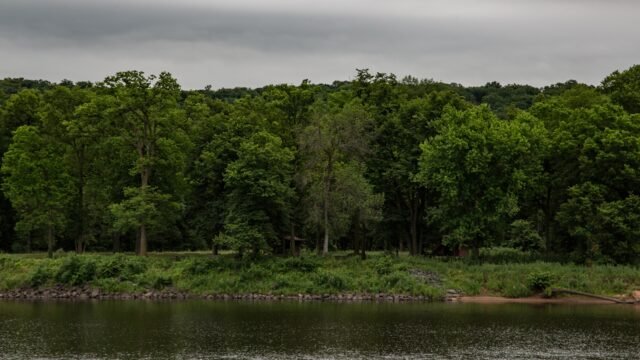
Discover the Missouri-Yellowstone Confluence

Photo: Farragutful / Wikimedia Commons, CC BY-SA 4.0
The confluence of the Missouri and Yellowstone rivers is one of the region’s most historically significant natural landmarks.
Located southwest of Williston, the area played an important role in transportation, trade, and exploration.
Visitors interested in Lewis and Clark history may find the region especially fascinating.
Explore Fort Union Trading Post National Historic Site

Photo: Farragutful / Wikimedia Commons, CC BY-SA 4.0
Fort Union Trading Post National Historic Site preserves the story of one of the most important fur-trading posts on the upper Missouri River.
The reconstructed trading post offers exhibits and opportunities to learn about the region’s nineteenth-century history.
It’s a rewarding destination for visitors who enjoy historic sites and cultural interpretation.
Visit Fort Buford State Historic Site
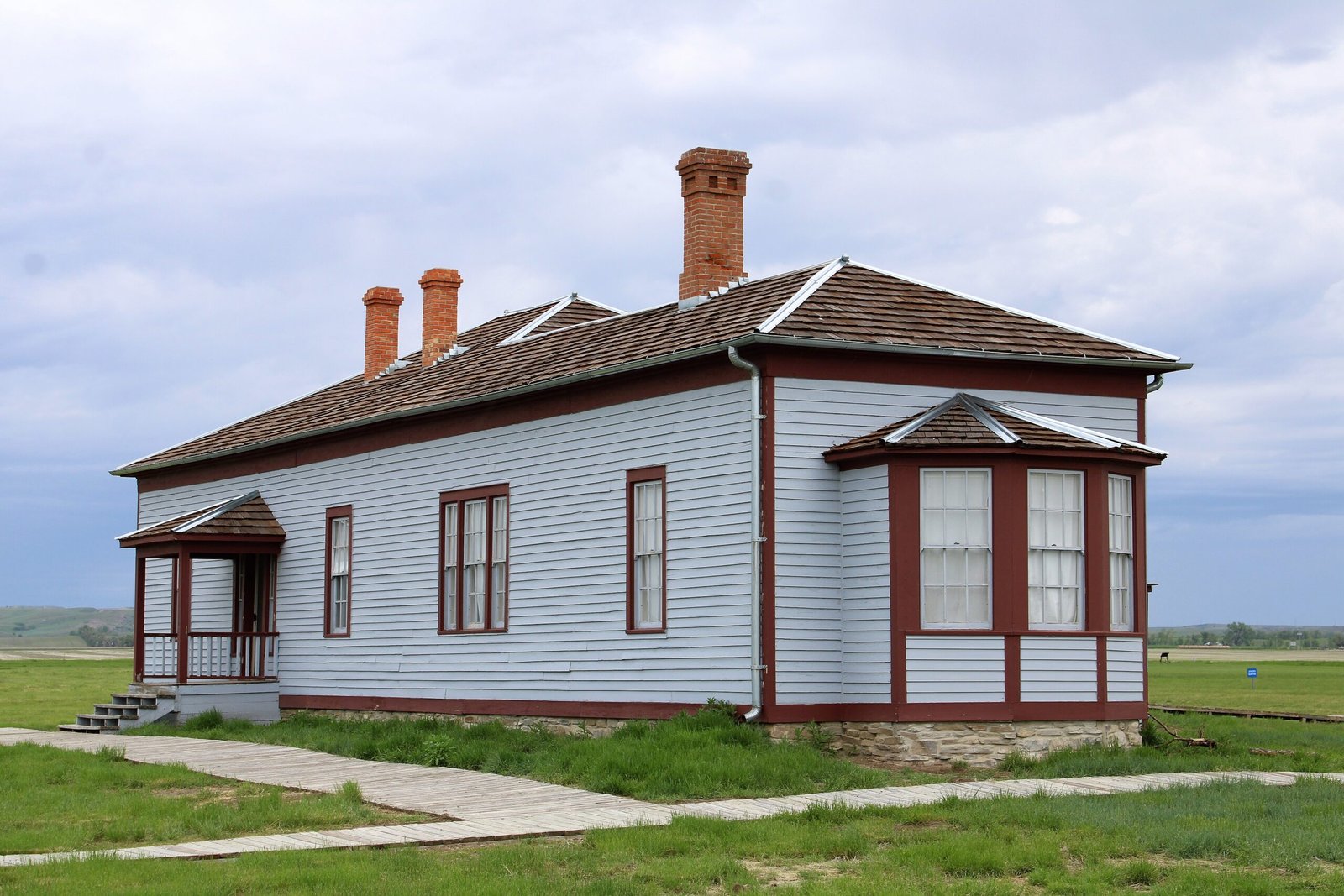
Photo: Farragutful / Wikimedia Commons, CC BY-SA 4.0
Fort Buford State Historic Site preserves remnants of a nineteenth-century military post.
The site provides insight into the region’s military and frontier history.
For RV travelers spending several days near Williston, it can be combined with other historical attractions.
The best time to visit Lewis and Clark State Park
Lewis and Clark State Park is open year-round for day-use recreation.
However, camping services and recreational activities vary with the seasons.
Spring brings fresh prairie growth and gradually warming temperatures.
Wind and changing weather can make camping unpredictable.
Summer is the main recreation season.
Warm weather makes boating, fishing, swimming, and paddling especially appealing.
However, popular weekends can be busy.
Fall brings cooler temperatures and beautiful prairie colors.
Fishing and hiking can remain enjoyable, depending on conditions.
Winter transforms the park into a destination for snowshoeing, fat-tire biking, sledding, and ice fishing.
However, not all camping facilities remain available.
For RV travelers, June through September is generally the most convenient period.
Our recommendation: June and September are particularly attractive for RV travelers who prefer comfortable outdoor temperatures and potentially less crowded conditions. July and August are best for families who want to enjoy swimming and water recreation.
What we like about Lewis and Clark State Park
Lewis and Clark offers several advantages that make it appealing to RV travelers.
Scenic lakeside setting: Lake Sakakawea provides beautiful views and extensive recreation.
Full-hookup campsites: Water, sewer, and electricity are available at 41 premium sites.
Affordable rates: Published campsite prices are competitive for a developed state park.
Fishing opportunities: Walleye, sauger, and northern pike attract anglers.
Marina and boat access: Convenient for visitors bringing boats.
Swimming beach: A popular family amenity during summer.
Hiking trails: Several routes introduce visitors to the park’s prairie landscape.
Visitor center: Supplies, information, and interpretive resources are available.
Dog park: A useful convenience for RV travelers with pets.
Group camping: Multiple-unit sites accommodate families and camping groups.
Historical connections: Lewis and Clark interpretation adds another dimension to the experience.
For RV travelers who appreciate outdoor recreation, scenic landscapes, and practical amenities, the park offers an attractive combination.
Potential drawbacks to consider
There are a few limitations worth understanding.
Wind exposure: Prairie weather can produce strong winds.
Limited shade: Some campsites are relatively open.
Variable campsite privacy: Certain loops have closer spacing than others.
Changing lake levels: Marina and boating access may be restricted.
Seasonal services: Some amenities operate primarily during warmer months.
Insects: Mosquitoes, flies, and other insects may be present.
Remote setting: Major shopping and services require a drive into Williston.
Variable electrical service: Confirm amperage for your particular campsite.
Big-rig limitations: Not every site necessarily accommodates very large RVs.
Busy holiday weekends: Popular periods may bring more noise and activity.
These considerations are manageable for most visitors.
However, travelers seeking heavily shaded campsites or guaranteed marina access should plan carefully.
Reservations, rates, and practical planning
Lewis and Clark State Park accepts reservations through the North Dakota Parks and Recreation system.
Campsites may be reserved up to 95 days before the intended arrival date.
Reservations are available online or by telephone.
Published campsite rates
| Campsite category | Nightly rate |
|---|---|
| Premium — electric, water, sewer | $30–$35 |
| Modern — electric and water | $25–$30 |
| Group premium | $30–$35 per camping unit |
| Group modern | $25–$30 per camping unit |
| Primitive | $15 |
| Seasonal camping cabin | $70–$85 |
Official North Dakota Parks and Recreation published rates, checked October 2026. Actual totals may include reservation or other applicable fees.
Important campground policies
Reservations: Up to 95 days in advance.
Check-in: 4 p.m.
Checkout: 3 p.m.
Pets: Welcome but must remain leashed outside designated off-leash areas.
Campfires: Follow posted restrictions and use designated fire facilities.
Firewood: Purchase approved firewood locally; don’t bring prohibited out-of-state firewood.
Generators: Follow posted operating hours.
Quiet hours: Observe the park’s campground quiet period.
Boating: Confirm current water levels and marina access.
Fishing: A valid license may be required.
Campsite occupancy: Confirm the number of permitted camping units and visitors for your reservation category.
Directions and contact information
Lewis and Clark State Park is located near Epping in northwestern North Dakota.
The park is approximately 19 miles southeast of Williston, off Highway 1804.
Travelers should follow the official park directions and use the designated campground entrance.
For larger RVs, confirm the preferred approach before arrival.
Official planning information
- Address: 4904 119th Road NW, Epping, ND 58843
- Park telephone: 701-859-3071
- Reservations: 800-807-4723
- Email: lcsp@nd.gov
- Official website: Lewis and Clark State Park
- Camping information: Official campsites and rates
- Reservations: Reserve North Dakota Parks
Campground map: Official campground map
- Marina information: Official marina information
Final verdict: Is Lewis and Clark State Park worth visiting?
Absolutely—particularly for RV travelers who enjoy lakeside camping, fishing, boating, and wide-open prairie scenery.
Lewis and Clark State Park combines an attractive natural setting with practical camping facilities.
The availability of full-hookup sites is a major advantage.
So are the campground’s showers, dump station, visitor center, swimming beach, marina, and hiking trails.
And with published rates ranging from $25 to $35 for modern and premium campsites, the park offers good value compared with many private RV resorts.
Its location along Lake Sakakawea makes it especially appealing to anglers and boaters.
However, visitors should choose their campsite carefully.
Some loops provide more privacy and spacing than others, and the open prairie landscape means wind and sunshine can be significant factors.
Boaters should also verify lake levels before traveling.
Campers Frontier’s recommendation: Lewis and Clark State Park is an excellent choice for RV travelers seeking an affordable, scenic lakeside campground in North Dakota. Reserve a premium full-hookup site if you prefer maximum convenience, consider the more spacious camping areas if privacy matters, and allow at least three nights to enjoy the lake, hiking trails, and surrounding Williston region.
Liked this? Get one like it every week.
Practical RV guides, gear picks and park reviews, in your inbox once a week, plus the free RV Trip-Ready Checklist when you join. See what's inside.
Free. One email a week. Unsubscribe anytime.