RV Maintenance Checklist: The Seasonal Jobs People Skip
Most big RV repair bills start as small jobs nobody got around to: cracked roof sealant, old trailer tires, dry slide seals. The fix is a short list of checks, done at the right time of year, every year.
This essential seasonal RV maintenance checklist is based on manufacturer manuals and owner reports. Your own manuals come first. What follows is a general framework those manuals fill in for your rig.
Prefer to watch? Here is the full video from Campers Frontier:
Start with your manuals and a simple log
Gather the manuals for the RV itself, the furnace, water heater, fridge, air conditioner, axles, and roof. Those service intervals come first.
Keep a simple log too. Write down the date, what you did, and what you noticed. It is the easiest way to remember when the roof was last sealed or when the bearings were last serviced, and it is the habit that keeps the rest of this checklist honest.
Spring: wake the RV up
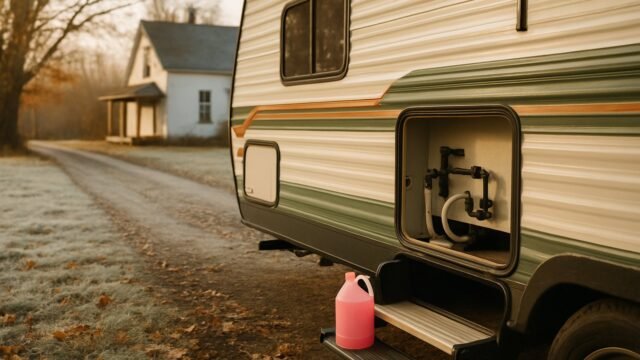
If you winterized, start by de-winterizing: flush the antifreeze out of every line, put the water heater bypass back to normal, and sanitize the fresh water system before you drink from it. Refill the water heater before you turn it on, and check the anode rod if yours uses one.
Test every detector — smoke, carbon monoxide, and propane — and check the date on each one. Detectors don’t last forever, and many have a replace-by date printed on them. Make sure the fire extinguisher is still charged and easy to reach. Look for signs of mice before you load anything, and remove any vent screens you put on for storage.
The roof, the seals, and the tires
Water damage is one of the most expensive problems an RV can have, and it often starts with sealant that cracked over the winter — something you cannot see from the driveway. Inspect the sealant around every vent, skylight, antenna, and air conditioner, and along the front and rear edges. Many owners check the roof at least twice a year. Use a sealant made for your roof type; self-leveling lap sealant is common on horizontal surfaces. If you’re not comfortable on a ladder or a roof, have a technician do it. That’s a smart call, not a failure.
Clean the roof with a cleaner made for your roof material, then check the window, door, and slide-out seals and treat the slide seals with a rubber seal conditioner so they stay flexible.
Find the four-digit date code on each tire’s sidewall. Many owners and tire makers suggest replacing trailer tires after around five to seven years, even if the tread looks fine, because rubber ages from the inside out. Check the pressure cold, before you drive, and look for cracks, bulges, and uneven wear. Wheel bearings and brakes need regular service, often once a year or by mileage; your axle manufacturer lists the interval.
Water, slides, batteries, and propane
Once the water system is back on, run the pump and look for leaks under sinks, behind the toilet, around the water heater, and at the pump itself. A slow drip in spring can soak a floor by summer. Work the black and gray tank valves, and run each slide-out all the way out and back in, following the slide manufacturer’s guidance on cleaning or lubrication. Finish with the small moving parts: entry steps, door hinges and latches, and stabilizer jacks.
If you have flooded lead-acid batteries, check the water level and top them off with distilled water, wearing gloves and eye protection, and clean corrosion off the terminals. If a battery sat all winter, charge it fully before you count on it. A smart charger or maintainer made for your battery type makes this easy. Many RV manufacturers recommend a propane system leak test and appliance check by a qualified technician once a year. If the furnace, water heater, or fridge isn’t working right, that’s a job for a technician too.
Summer, fall, and the walk-around before every trip
In summer, clean or replace the return air filters regularly, often every few weeks in heavy use. Once a season, many owners also clean the condenser coils on the roof unit with a coil cleaner and a gentle rinse, with the power off. Keep checking tire pressure before every travel day, and follow the generator manual for oil changes if you have one.
In fall, clear leaves off the roof, inspect the seals again, empty the fridge, and close up gaps where mice could get in. Winterize before the first hard freeze; we have a full episode on winterizing a travel trailer and the steps people miss. Charge and disconnect the batteries, or keep them on a maintainer, and close the propane valves.
Some checks aren’t seasonal at all. Before every trip, check tire pressure, lug nuts, and lights, and test the brakes as you pull out. Check the hitch, safety chains, and breakaway cable. Antenna down, steps up, slides and awning in. Then do one last slow walk around the whole rig, looking for anything still plugged in, open, or hanging down. It’s the step people skip when they’re running late, and it’s the one that catches the most mistakes. Test the detectors too.
Three mistakes that turn small jobs into big ones
The first is inspecting from the ground. You can’t see cracked sealant from the driveway. Get up close, use a ladder and a phone camera, or have it done. The second is judging tires by tread alone. Trailer tires often age out long before they wear out, so the date code matters as much as the tread depth. The third is going by memory. Without a log, it’s easy to think the bearings were done last year when it was really three years ago. Write it down, and let the list do the remembering for you.
FAQ
How often should I inspect the RV roof?
Many owners check the roof at least twice a year, and some roof makers suggest every few months. Follow your roof manufacturer’s guidance. A glance from the ground is not enough.
When should trailer tires be replaced if the tread still looks fine?
Many owners and tire makers suggest replacing trailer tires after around five to seven years, even with good tread, because rubber ages from the inside out. Read the date code, check pressure cold, and look for cracks or bulges.
Do I need a technician for the propane system?
Many RV manufacturers recommend a propane system leak test and appliance check by a qualified technician once a year. If the furnace, water heater, or fridge isn’t working right, that is a job for a technician too.
A list you can actually use
Write the seasonal jobs in your log, and the next season starts from a list instead of a guess. For the checks you’ll do before every trip, the free RV Trip-Ready Checklist puts them on one printable page, along with arrival, setup, and pack-up. If you are still getting comfortable with the basics of RV travel, our RV camping for beginners guide and Start Here page are the best next stops.
And if this helped, subscribe to Campers Frontier for more RV guides and Campground Reports.
Recommended gear
These are researched picks from the video, chosen from specs and owner reviews, not from hands-on testing in our rig:
- 303 Rubber Roof Cleaner
- Dicor 501LSW-1 Self-Leveling Lap Sealant, White
- 303 Aerospace Protectant for Vinyl, Plastic & Rubber
- NOCO GENIUS5 Smart Battery Charger and Maintainer
- Frost King ACF19 Foam Coil Cleaner
As an Amazon Associate I earn from qualifying purchases.
Follow your RV, roof, axle, and appliance manuals. Propane and appliance service should be done by a qualified technician. This is general information, not professional advice.
Liked this? Get one like it every week.
Practical RV guides, gear picks and park reviews, in your inbox once a week, plus the free RV Trip-Ready Checklist when you join. See what's inside.
Free. One email a week. Unsubscribe anytime.